

goldenrods
Solidago
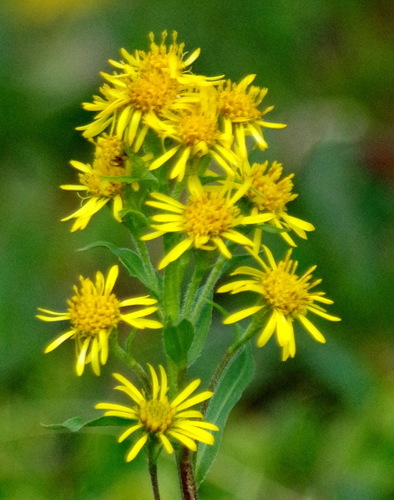
What it is
Goldenrods are a group of wildflowers known for their tall stalks and bright yellow flower clusters that bloom in late summer and fall. Despite common misconceptions, they are not a major cause of hay fever; ragweed, which blooms at the same time, is usually the culprit.
Where and when to find it
- Habitat
- Open fields, meadows, roadsides, and disturbed areas.
- How to find it
- Look for tall plants with fluffy yellow tops, especially in sunny, open spaces during late summer and fall.
- Best time of day
- Daytime
- Best season
- Late summer to fall
How it lives
- What it eats
- As a plant, goldenrod makes its own food using sunlight, water, and air.
- What eats it
- Many insects, like bees, butterflies, and beetles, visit goldenrod for nectar and pollen. Some birds and small mammals also eat its seeds.
Worth knowing
- Goldenrod's scientific name, Solidago, means 'to make whole' or 'to heal' because of its traditional medicinal uses.
- The plant's vibrant yellow flowers are sometimes used to make natural dyes for fabric.
- There are over 100 different kinds of goldenrod!
- Even though it's bright yellow, goldenrod doesn't cause hay fever like its neighbor, ragweed.
- Native Americans used goldenrod for many things, including medicines and dyes.
Why it matters
Goldenrod is a vital late-season food source for many pollinators, helping them gather energy before winter. It also helps prevent soil erosion.