

sensitive fern
Onoclea sensibilis
What it is
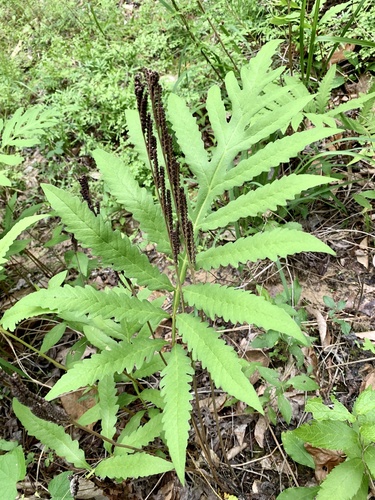
Onoclea sensibilis, the sensitive fern, also known as the bead fern, is a coarse-textured, medium to large-sized deciduous perennial fern. The name comes from the observation by early American settlers that it was very sensitive to frost, the fronds dying quickly when first touched by it. It is sometimes treated as the only species in Onoclea, but some authors do not consider the genus monotypic.
Where and when to find it
- Habitat
- Common in wet woods, swamps, marshes, and along stream banks in the eastern and central United States.
- How to find it
- Look for its broad, light green, lacy fronds in moist, shady areas. In fall and winter, keep an eye out for its tall, brown, bead-like spore fronds.
- Best time of day
- Green fronds in spring and summer; spore fronds visible year-round, especially in fall/winter.
How it lives
- What it eats
- Sunlight and nutrients from the soil
- What eats it
- Deer (occasionally for foliage), some insects
Worth knowing
- It's called 'sensitive' because its green fronds are easily damaged by frost.
- The spore-bearing fronds look like strings of beads.
- It often grows in large colonies.
- The spore fronds stay upright and disperse spores even after the green fronds have died back.
- It's one of the few ferns that has completely different fertile and sterile fronds.
- Its scientific name, Onoclea, means 'closed vessel' referring to its spore structures.
Why it matters
Sensitive ferns help cover and protect the forest floor, preventing soil erosion. They add beauty to wetlands and moist areas.