

Bluegill
Lepomis macrochirus
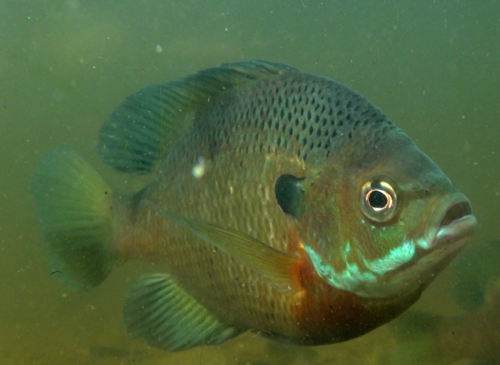
What it is
The bluegill (Lepomis macrochirus) is a species of freshwater fish sometimes referred to as bream, brim, or copper nose. It is a member of the sunfish family Centrarchidae of the order Perciformes. It is native to North America and lives in streams, rivers, lakes, and ponds. It is commonly found east of the Rockies. It usually hides around, and inside, old tree stumps and other underwater structures. It can live in either deep or very shallow...
Where and when to find it
- Habitat
- Found in almost every freshwater system across the United States, including lakes, ponds, rivers, and streams.
- How to find it
- Look into clear water near docks, weeds, or logs. You might spot them in groups. They are usually easy to see!
- Best time of day
- Daytime, especially warmer parts of the day.
How it lives
- What it eats
- Aquatic insects, worms, small fish, plant matter
- What eats it
- Largemouth bass, pike, catfish, herons, eagles, otters
Worth knowing
- Male bluegill guard their nests very fiercely.
- Their name comes from the bright blue color on the edge of their gill cover.
- Bluegill can live for 5-6 years in the wild.
- They are a very popular fish for young anglers to catch.
- Bluegill often make 'beds' or shallow nests in the lake bottom.
- They can change their color a bit to blend in with their surroundings.
Why it matters
Bluegill are a vital link in the food chain, eating insects and plants and being a major food source for larger fish and birds.