

Mexican Long-nosed Armadillo
Dasypus mexicanus
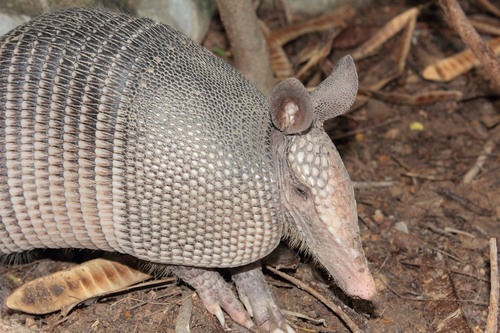
What it is
The nine-banded armadillo (Dasypus novemcinctus), also called the nine-banded long-nosed armadillo or common long-nosed armadillo, is a species of armadillo native to North, Central, and South America, making it the most widespread of the armadillos. They superficially resemble pangolins, though the two are not closely related; they have undergone convergent evolution.
Where and when to find it
- Habitat
- You can find this armadillo in warm, grassy, or wooded areas in the southern United States, especially Texas.
- How to find it
- Look for them at dawn or dusk, often near brush or forests. They move slowly as they sniff the ground for food.
- Best time of day
- Dawn or dusk; spring and summer.
How it lives
- What it eats
- Mostly insects, grubs, and other small critters.
- What eats it
- Coyotes, bobcats, large birds of prey.
Worth knowing
- Armadillos are the only mammals with bony armor plating.
- The word 'armadillo' means 'little armored one' in Spanish.
- They can hold their breath for a long time to cross water on the riverbed.
- Some armadillos can jump surprisingly high when startled!
- They have very poor eyesight but great senses of smell and hearing.
- Armadillos can roll into a ball, but only some species do this fully.
Why it matters
Armadillos help control insect populations. Their digging helps turn over soil, making it healthier for plants.