

Mule Deer
Odocoileus hemionus
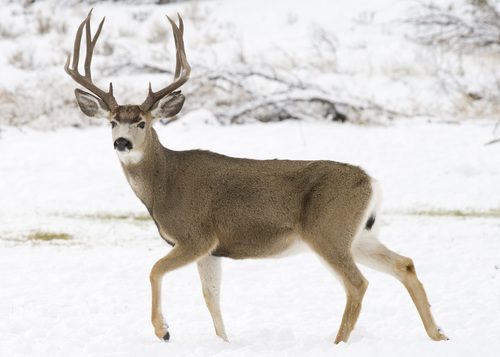
What it is
The mule deer (Odocoileus hemionus) is a deer indigenous to western North America; it is named for its ears, which are large like those of the mule. The several subspecies include the black-tailed deer.
Where and when to find it
- Habitat
- You can find Mule Deer mostly in the western half of the US, from forests and mountains to grasslands and deserts.
- How to find it
- Look for them at dawn and dusk, often grazing in open areas or at the edge of forests. Listen for rustling in the bushes. Their large ears are a good clue!
- Best time of day
- Dawn and dusk, any season.
How it lives
- What it eats
- Leaves, twigs, grasses, and shrubs
- What eats it
- Mountain lions, coyotes, wolves, bears
Worth knowing
- They have a unique way of running called 'stotting' or 'pronking', where all four feet leave the ground at once.
- Male Mule Deer grow antlers every year and then shed them.
- Fawns (baby deer) have white spots that help them hide.
- Their ears can be up to 10 inches long!
- They often freeze when they sense danger, hoping to blend in.
- Their tail has a black tip, which helps tell them apart from White-tailed Deer.
Why it matters
Mule Deer are a key food source for predators like mountain lions. They also browse on plants, helping to shape their habitats.