

American tuliptree
Liriodendron tulipifera
What it is
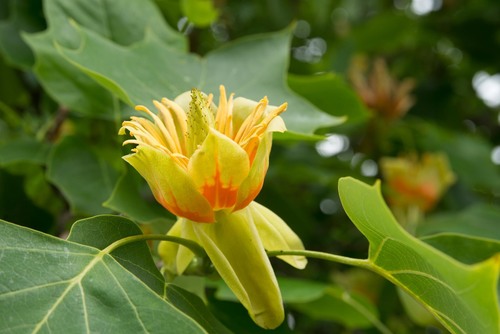
Liriodendron tulipifera—known as the tulip tree, American tulip tree, tuliptree, tulip poplar, whitewood, fiddletree, and yellow-poplar—is the Western Hemisphere representative of the two-species genus Liriodendron, and the tallest eastern hardwood. It is native to eastern North America from Southern Ontario and Illinois eastward to southeastern Massachusetts and Rhode Island, and south to central Florida and Louisiana. It can grow to more than 50 m (160 ft) in virgin cove forests of the Appalachian Mountains, often with no limbs...
Where and when to find it
- Habitat
- Native to the eastern United States, often found in moist forests and along rivers.
- How to find it
- Look for its tall, straight trunk and distinctive four-lobed leaves (they look like a cat's head silhouette!). In spring, spot the tulip-shaped flowers high in the canopy.
- Best time of day
- Flowers in late spring/early summer; yellow leaves in fall; unique leaf shape year-round.
How it lives
- What it eats
- Sunlight, water, nutrients from soil
- What eats it
- Deer (young leaves), squirrels (seeds), various insects
Worth knowing
- The wood is often called 'poplar' and is used for furniture and building.
- Its flowers produce a lot of nectar, attracting bees and hummingbirds.
- The leaves are very distinct, looking like they've been cut off straight across the top.
- It is the state tree of Indiana, Kentucky, and Tennessee.
- Early American canoes were sometimes made from its large trunks.
- It can live for hundreds of years.
Why it matters
American Tuliptrees provide important habitat and food for many animals. They are a valuable timber tree and help clean our air.