

box elder
Acer negundo
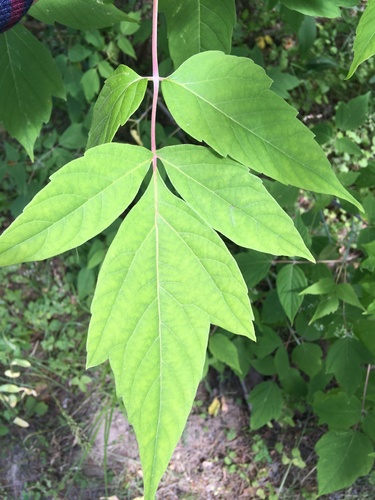
What it is
Acer negundo is a species of maple native to North America. In Canada it is commonly known as Manitoba maple and occasionally as elf maple. Box elder, boxelder maple, ash-leaved maple, and maple ash are its most common names in the United States; in the United Kingdom and Ireland it is also known as ashleaf maple.
Where and when to find it
- Habitat
- You can find Box Elders almost everywhere in the United States, often near rivers and streams, but also in parks and backyards.
- How to find it
- Look for its unique leaves, which have 3 to 5 (sometimes 7) leaflets, unlike most maples with one palm-shaped leaf. The twigs are often green or purplish.
- Best time of day
- Spring and summer for leaves, fall for interesting seed clusters.
How it lives
- What it eats
- Sunlight and water; its seeds are eaten by birds.
- What eats it
- Boxelder bugs, deer, squirrels, birds eat its seeds.
Worth knowing
- It's the only maple tree in North America with compound leaves (leaves made of smaller leaflets).
- Boxelder wood is soft and light, not often used for furniture.
- Native Americans used the tree's sap to make syrup, like other maples.
- The Box Elder is sometimes called 'ash-leaved maple' because its leaves look like those of an ash tree.
- Female Box Elder trees produce distinctive V-shaped 'helicopters' (seeds) that hang in clusters.
- The tree is a favorite home for orange and black boxelder bugs, which are harmless to humans.
Why it matters
Box Elders provide quick shade, stabilize soil, and offer food and shelter for wildlife. They are important pioneer species in disturbed areas.