

eastern redcedar
Juniperus virginiana
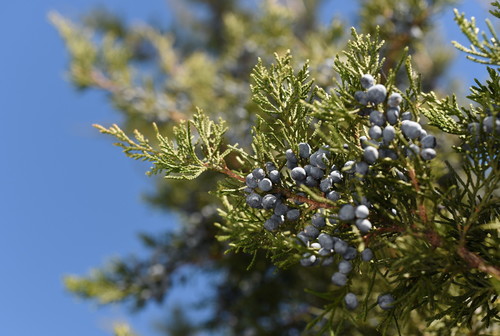
What it is
Juniperus virginiana — its common names include red cedar, eastern redcedar, Virginian juniper, eastern juniper, red juniper, pencil cedar, and aromatic cedar — is a species of juniper native to eastern North America from southeastern Canada to the Gulf of Mexico and east of the Great Plains. Further west it is replaced by the related Juniperus scopulorum (Rocky Mountain juniper) and to the southwest by Juniperus ashei (Ashe juniper).
Where and when to find it
- Habitat
- Found widely across the eastern and central United States. It grows in open fields, rocky hillsides, and along roads.
- How to find it
- Look for its pyramid shape and dark green color, especially in winter. Crush a small cluster of its needle-like leaves for a quick smell test.
- Best time of day
- All year round, as it's an evergreen.
How it lives
- What it eats
- It makes its own food from sunlight, water, and air.
- What eats it
- Birds (like cedar waxwings), deer, and other mammals eat its berries or leaves.
Worth knowing
- Its 'berries' are actually tiny cones.
- The wood is very fragrant and is often used for cedar chests.
- It is a type of juniper, not a true cedar.
- Native Americans used the wood for bows and the berries for food and medicine.
- Its dense branches make great hiding spots for small animals.
- Some birds eat its berries and then help spread its seeds.
Why it matters
Eastern redcedar provides shelter and food for many animals, especially birds in winter. Its dense growth helps prevent soil erosion.