

Bobcat
Lynx rufus
What it is
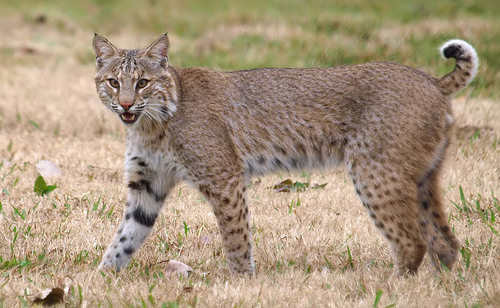
The bobcat (Lynx rufus) is a North American cat that appeared during the Irvingtonian stage of around 1.8 million years ago (AEO). Containing 12 recognized subspecies, it ranges from southern Canada to central Mexico, including most of the contiguous United States. The bobcat is an adaptable predator that inhabits wooded areas, as well as semidesert, urban edge, forest edge, and swampland environments. It remains in some of its original range, but populations are vulnerable to local...
Where and when to find it
- Habitat
- Bobcats live in many habitats across the United States, from forests and swamps to deserts and mountainsides.
- How to find it
- It's rare to see a Bobcat! They are shy and mostly active at dawn, dusk, and night. Look for tracks in mud or snow near wooded areas.
- Best time of day
- Dawn, dusk, and nighttime. They are active year-round.
How it lives
- What it eats
- Rabbits, hares, rodents, birds, sometimes deer.
- What eats it
- Mountain lions, wolves (in some areas), humans.
Worth knowing
- Bobcats are excellent climbers and swimmers.
- Each Bobcat has a unique pattern of spots and stripes, like fingerprints.
- Their short tail is where they get their name 'Bobcat'.
- A Bobcat can jump up to 10 feet to catch prey!
- They scent-mark their territory, which means they leave messages for other bobcats.
- Even though they are wild, they are part of the 'Lynx' family, just like bigger lynx cats.
Why it matters
Bobcats are important predators that help manage populations of small animals. Their health indicates a balanced ecosystem.