

Brown-belted Bumble Bee
Bombus griseocollis
What it is
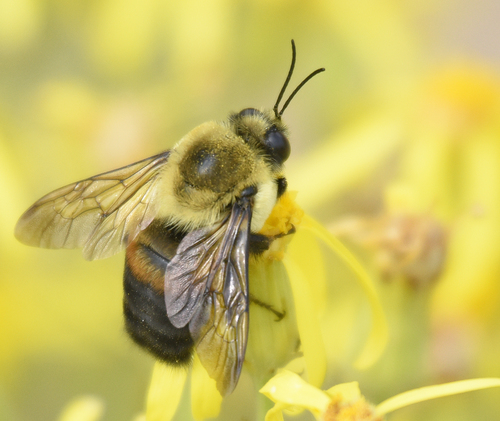
Bombus griseocollis is a species of bumblebee known commonly as the brown-belted bumblebee. It is native to much of the United States except for the Southwest, and to the southernmost regions of several of the provinces of Canada.
Where and when to find it
- Habitat
- Found in open fields, gardens, and meadows across much of the eastern and central US.
- How to find it
- Look for a fuzzy, black and yellow bee with a light yellowish-brown band on its back. They are often seen visiting flowers.
- Best time of day
- Daytime, from spring to fall.
How it lives
- What it eats
- Nectar and pollen from flowers
- What eats it
- Birds, spiders, praying mantises, wasps
Worth knowing
- They have a distinctive yellowish-brown band on their abdomen (tummy).
- Like all bumble bees, they are very fuzzy, which helps them stay warm.
- They are important pollinators for many wild plants and crops like blueberries and cranberries.
- Bumble bees can 'buzz pollinate' by vibrating flowers, helping release pollen.
- Only the queen bee survives winter to start a new colony in spring.
- They are generally gentle and not aggressive unless their nest is threatened.
Why it matters
Brown-belted Bumble Bees are important pollinators, helping plants create seeds and fruits.