

Differential Grasshopper
Melanoplus differentialis
What it is
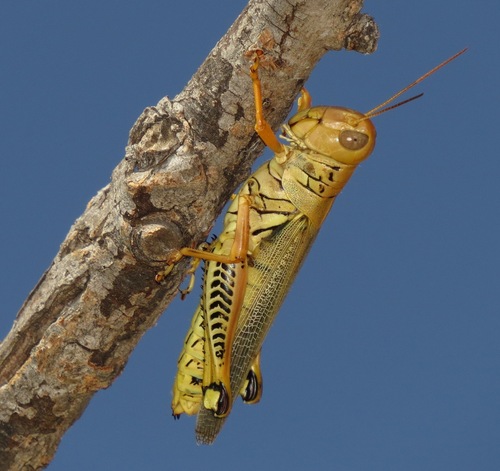
The differential grasshopper (Melanoplus differentialis) is a species of grasshopper belonging to the genus Melanoplus found throughout northern Mexico, central United States and southern Ontario, Canada. It is considered a pest in most of its range.
Where and when to find it
- Habitat
- Common across most of the US, especially in open grassy areas like fields, prairies, gardens, and along roadsides.
- How to find it
- Walk through grassy areas on sunny days. You'll likely see them jump or fly away. Listen for their crackling flight sound.
- Best time of day
- Daytime, summer and early fall.
How it lives
- What it eats
- Grasses, corn, soybeans, and other plant leaves.
- What eats it
- Birds, lizards, snakes, frogs, spiders, and other insects.
Worth knowing
- They can change color slightly to blend in with their surroundings.
- Female grasshoppers lay their eggs in the soil.
- They don't bite, but they might tickle if they land on you!
- Their hind legs are super strong for jumping and 'singing'.
- They have short antennae, unlike crickets.
- You can sometimes hear them 'stridulate' or rub their legs together to make noise.
Why it matters
Differential Grasshoppers help break down plant material and are a very important food source for many animals, from birds to snakes.