

Cope's Gray Tree Frog
Dryophytes chrysoscelis
What it is
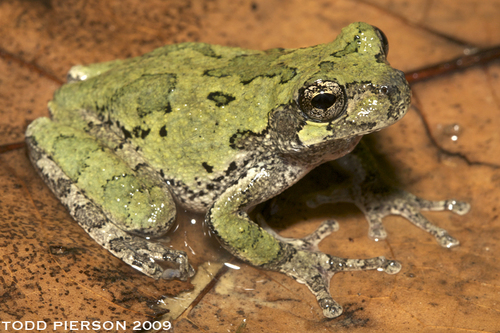
Cope's gray treefrog (Dryophytes chrysoscelis) is a species of treefrog found in the United States and Canada. It is almost indistinguishable from the gray treefrog (Dryophytes versicolor), and shares much of its geographic range. Both species are variable in color, mottled gray to gray-green, resembling the bark of trees. These are treefrogs of woodland habitats, though they will sometimes travel into more open areas to reach a breeding pond. The only readily noticeable difference between the...
Where and when to find it
- Habitat
- Found in forests and woodlands across eastern and central United States, usually near water.
- How to find it
- Listen for their loud, buzzing call at night, especially after rain. Look on tree trunks or leaves near ponds.
- Best time of day
- Nighttime, especially spring and summer evenings for calling.
How it lives
- What it eats
- Insects like moths, crickets, flies, and beetles.
- What eats it
- Snakes, birds, raccoons, larger frogs.
Worth knowing
- They can survive being partially frozen in winter.
- Their toes have special pads that help them stick to surfaces.
- They look very similar to the Eastern Gray Tree Frog but have a different call.
- Their calls sound like a fast, raspy trill.
- Baby Cope's Gray Tree Frogs are usually greenish.
- They have bright yellow or orange patches on the insides of their legs.
Why it matters
These frogs eat many small insects, helping to keep insect populations balanced. They are also food for larger animals.