

Gray Treefrog
Dryophytes versicolor
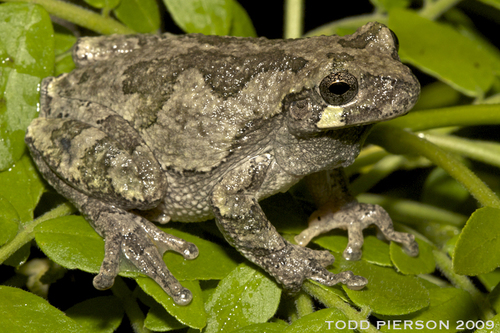
What it is
The gray treefrog (Dryophytes versicolor) is a species of small arboreal frog in the family Hylidae. The species is native to much of the eastern United States and southeastern Canada.
Where and when to find it
- Habitat
- Widespread across the eastern United States, found in forests, woodlands, and swamps with trees near water.
- How to find it
- Listen for their distinctive, musical trill call, especially on warm, humid evenings. Look for them on tree bark or leaves near water.
- Best time of day
- Evening and night, from spring through summer, especially after rain.
How it lives
- What it eats
- Moths, crickets, flies, ants, and other small insects.
- What eats it
- Snakes, birds, raccoons, and other larger frogs.
Worth knowing
- Their toes have special sticky pads that help them climb trees.
- They are nocturnal, meaning they are most active at night.
- They can survive freezing temperatures by producing a natural 'antifreeze' in their bodies.
- Their call sounds like a musical trill or a bird singing.
- They have bright yellow or orange under their thighs, which is a surprise flash of color.
- Females are usually larger than males.
Why it matters
Gray Treefrogs help control insect populations in forests and wetlands. They are also a food source for many animals, showing how healthy an ecosystem is.