

crown-tipped coral fungus
Artomyces pyxidatus
What it is
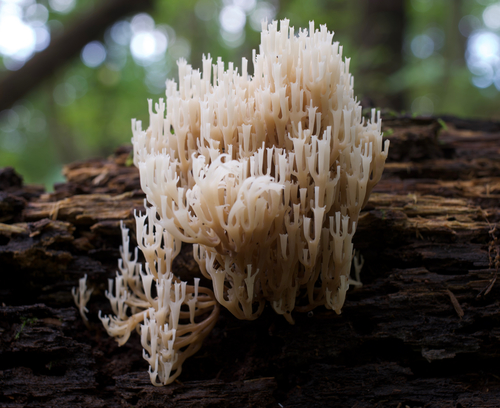
Artomyces pyxidatus is a coral fungus that is commonly called crown coral or crown-tipped coral fungus. Its most characteristic feature is the crown-like shape of the tips of its branches. The epithet pyxidatus means "box-like"—a reference to this shape.
Where and when to find it
- Habitat
- Found growing on dead hardwood logs and branches in forests across the eastern and central United States, and parts of the Pacific Northwest.
- How to find it
- Look closely on fallen logs and stumps in damp, shaded wooded areas. They are easy to miss because they are small and blend in.
- Best time of day
- Summer and fall, especially after rain.
How it lives
- What it eats
- Dead wood
- What eats it
- Some insects, slugs
Worth knowing
- It gets its name from the crown-shaped tips of its branches.
- It is a saprobic fungus, meaning it feeds on dead organic matter.
- It has a delicate, brittle texture.
- Young ones are considered edible for humans.
- It is often mistaken for a type of marine coral.
- It helps create homes for tiny decomposers in the wood.
Why it matters
Crown-tipped coral fungi help break down dead wood, recycling nutrients back into the forest soil. This makes the forest rich and healthy for new plants.