

Pear-shaped Puffball
Apioperdon pyriforme
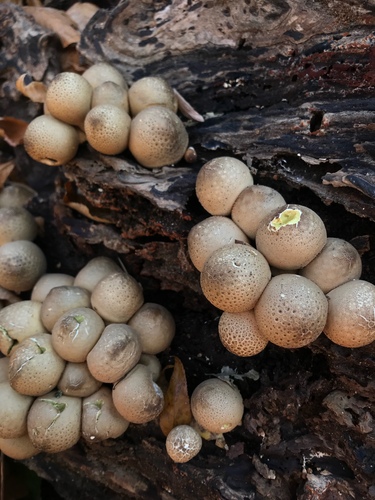
What it is
Apioperdon pyriforme commonly known as the pear-shaped puffball or stump puffball, is a saprobic fungus present throughout much of the world. Emerging in autumn, this puffball is common and abundant on decaying logs of both deciduous and coniferous wood. It is considered a choice edible when still immature and the inner flesh is white. It is often called Lycoperdon pyriforme, but was transferred to Apioperdon in 2017 based on phylogenetic and morphological differences. It is the...
Where and when to find it
- Habitat
- You can find these puffballs growing on old, decaying wood in forests all across the United States.
- How to find it
- Look on fallen logs, stumps, and branches in damp, wooded areas. They often grow in large groups.
- Best time of day
- Summer and fall, especially after rain.
How it lives
- What it eats
- Dead wood
- What eats it
- Some insects, slugs
Worth knowing
- They are one of the most common puffball mushrooms.
- The 'puff' is how they spread their spores to grow new mushrooms.
- They often grow in huge clusters on rotting wood.
- Young ones are edible for humans, but always check with an expert!
- Their scientific name, pyriforme, means 'pear-shaped'.
- They don't have gills like many other mushrooms.
Why it matters
Pear-shaped puffballs help recycle nutrients in the forest. They break down old wood, making the soil healthy.