

Muskrat
Ondatra zibethicus
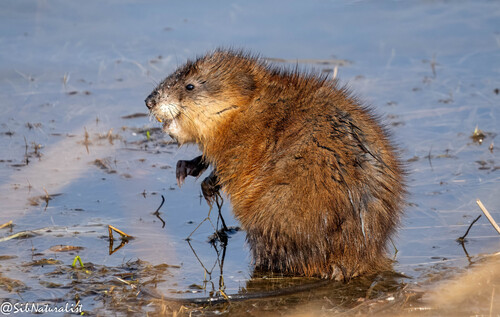
What it is
The muskrat (Ondatra zibethicus), the only species in genus Ondatra and tribe Ondatrini, is a medium-sized semiaquatic rodent native to North America and is an introduced species in parts of Europe, Asia, and South America. The muskrat is found in wetlands over a wide range of climates and habitats. It has important effects on the ecology of wetlands, and is a resource of food and fur for humans.
Where and when to find it
- Habitat
- Found across most of North America in wetlands, marshes, ponds, lakes, and slow-moving rivers.
- How to find it
- Look for their dome-shaped lodges made of plants sticking out of the water. Watch for ripples or their V-shaped wake as they swim.
- Best time of day
- Dawn and dusk. Active year-round, even under ice in winter.
How it lives
- What it eats
- Water plants, roots, stems, and sometimes small animals like mussels.
- What eats it
- Mink, raccoons, owls, hawks, foxes, and alligators.
Worth knowing
- Muskrats get their name from a musky scent they use to mark their territory.
- Their hind feet are partly webbed, and their tail is flattened on the sides to help them swim.
- They can stay underwater for 15-20 minutes.
- Their dens, called 'lodges,' often have underwater entrances to keep them safe.
- Baby muskrats are called 'kits.'
- They can sometimes be seen 'eating platforms' they build out of vegetation.
Why it matters
Muskrats create habitats in wetlands, which helps other animals. They eat plants, helping to manage water plant growth.