

Wapiti
Cervus canadensis
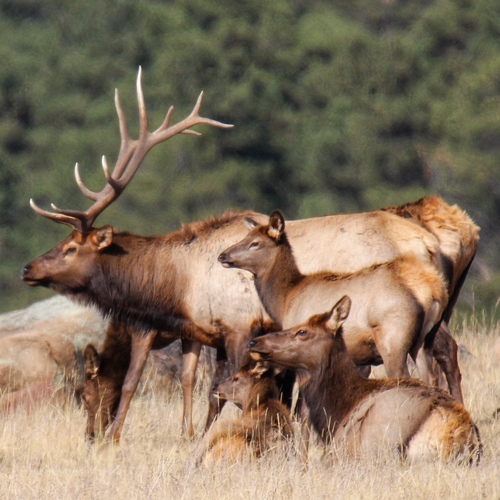
What it is
The elk (Cervus canadensis), also known as the wapiti, is one of the largest species within the deer family, Cervidae, and one of the largest terrestrial mammals in North America, as well as Central and East Asia. It is often confused with the larger Alces alces, which is called moose in North America, but called elk in British English, and related names in other European languages (German Elch, Swedish älg, French élan). The name "wapiti" is
Where and when to find it
- Habitat
- Found in forests, woodlands, and mountain ranges across the western United States, and in some eastern states.
- How to find it
- Look for them in open meadows at dawn or dusk, or listen for their bugling calls during the fall mating season. Stay a safe distance!
- Best time of day
- Dawn and dusk are best for spotting them, especially in spring, summer, and fall.
How it lives
- What it eats
- Grasses, leaves, bark, and twigs.
- What eats it
- Wolves, mountain lions, and grizzly bears.
Worth knowing
- Male Wapiti (bulls) shed their antlers every year and grow new, larger ones.
- They are excellent swimmers and can cross wide rivers.
- Their loud bugle call can be heard for miles, especially during mating season.
- A group of Wapiti is called a 'herd'.
- They have a creamy rump patch and a dark brown neck.
- Young Wapiti, called calves, have spots that help them hide.
Why it matters
Wapiti, also known as Elk, are important grazers that help shape landscapes by eating plants. They are also a key part of the food chain, supporting predators like wolves and bears.