

American Alligator
Alligator mississippiensis
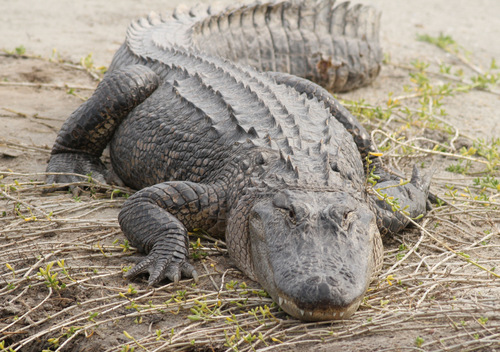
What it is
The American alligator (Alligator mississippiensis), sometimes referred to colloquially as a gator or common alligator, is a large crocodilian reptile endemic to the southeastern United States. It is one of two living species in the genus Alligator within the family Alligatoridae; it is larger than the other extant alligator species, the Chinese alligator. Adult male American alligators measure 3.4 to 5 m (11 to 16 ft) in length, and can weigh up to 453 to 600 kg (1,000 to...
Where and when to find it
- Habitat
- You can find American alligators in the southeastern United States, like Florida, Louisiana, and Georgia, in swamps and rivers.
- How to find it
- Look for them in still or slow-moving water. You might only see their eyes and snout peeking out.
- Best time of day
- Daytime, especially sunny afternoons; spring and summer.
How it lives
- What it eats
- Fish, birds, turtles, snakes, and small mammals.
- What eats it
- Large birds (when very young), bigger alligators, and sometimes bears.
Worth knowing
- Baby alligators sound like tiny birds chirping.
- They can hold their breath for a long time underwater.
- Alligators can replace their teeth many times throughout their lives.
- The gender of baby alligators is decided by the temperature of their nest.
- They have armor-like scales that protect them.
- Alligators can go through hundreds of teeth in their lifetime.
Why it matters
Alligators are important predators that help keep wetland ecosystems healthy. They dig 'gator holes' that provide water for other animals during dry times.