

Western Ratsnake
Pantherophis obsoletus
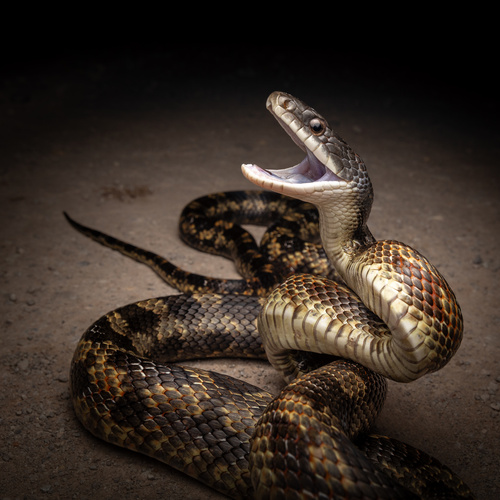
What it is
Pantherophis obsoletus – also known as the western rat snake, black rat snake, pilot black snake, or simply black snake – is a nonvenomous species of Colubridae found in central North America. No subspecies are currently recognized. Its color variations include the Texas ratsnake.
Where and when to find it
- Habitat
- Found in the central and eastern United States, often in forests, woodlands, farms, and even suburban areas.
- How to find it
- Look for them climbing trees, rafters in old barns, or basking on rocks. They can be found on the ground too.
- Best time of day
- Warm days, especially during spring, summer, and fall. Active during the day and twilight.
How it lives
- What it eats
- Rodents like mice and rats, birds and their eggs, and lizards.
- What eats it
- Hawks, owls, coyotes, foxes, and larger snakes.
Worth knowing
- They are non-venomous constrictors, meaning they squeeze their prey to eat it.
- Juveniles are often patterned differently than adults, making them harder to identify.
- When scared, they may coil up and vibrate their tail, sounding like a rattlesnake.
- They are sometimes called 'chicken snakes' because they occasionally eat chicken eggs.
- Their scientific name, Pantherophis, means 'panther snake' because of their powerful build.
- They are very good at finding hiding spots, including inside old buildings and attics.
Why it matters
These snakes are excellent at controlling rodent populations, which helps ecosystems and people. They are important in the food chain.