

Brown Anole
Anolis sagrei
What it is
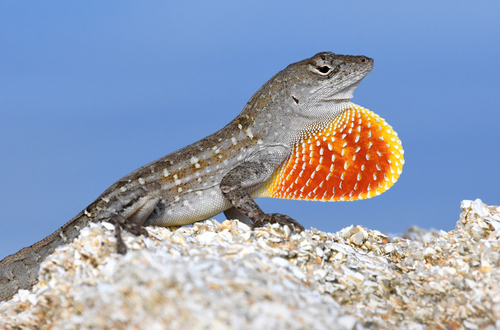
The brown anole (Anolis sagrei), also known as the Bahaman anole or De la Sagra's Anole, is a lizard native to Cuba and the Bahamas. It has been widely introduced elsewhere, by being sold as a pet lizard, and is now found in Florida and as far north in the United States as southern Georgia, Texas, Louisiana, Mississippi, Alabama, Hawaii, and Southern California. It has also been introduced to other Caribbean islands and Taiwan in Asia.
Where and when to find it
- Habitat
- Mostly found in the southeastern US, like Florida and other warm, humid places. They live in trees, bushes, and on fences.
- How to find it
- Look on tree trunks, fences, and plant leaves in sunny areas. They often sit very still, watching for insects. Watch for males doing 'push-ups' and flashing their throat dewlap!
- Best time of day
- Daytime, especially when it's sunny and warm. They are less active when it's cool.
How it lives
- What it eats
- Small insects like crickets, roaches, and flies.
- What eats it
- Birds, snakes, other lizards, domestic cats.
Worth knowing
- Males have a large, brightly colored throat flap called a 'dewlap' they display to attract mates or warn rivals.
- They can often be seen doing head bobs and 'push-ups' to communicate.
- They are not native to the US but have established populations in the Southeast.
- They lay one egg at a time, but can lay eggs frequently during warm months.
- Their eyelids are clear plates, so they appear to be always looking around.
- They can regrow their tails if they lose them, though the new tail might look a little different.
Why it matters
Brown Anoles eat many small insects, helping to keep their numbers in check. They are also food for larger animals.