

Common Side-blotched Lizard
Uta stansburiana
What it is
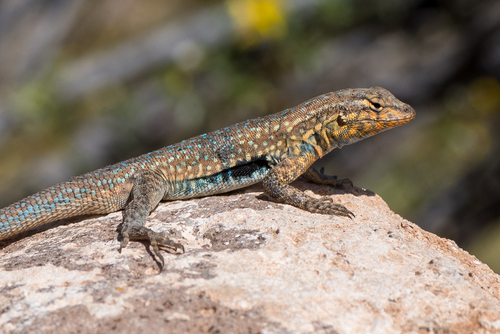
The common side-blotched lizard (Uta stansburiana) is a species of side-blotched lizard found on the Pacific Coast of North America. It is notable for having a unique form of polymorphism wherein each of the three different male morphs utilizes a different strategy in acquiring mates. The three morphs compete against each other following a pattern of rock, paper, scissors, where one morph has advantages over another but is outcompeted by the third.
Where and when to find it
- Habitat
- Found across the western United States, in deserts, dry grasslands, and rocky areas.
- How to find it
- Look for them on sunny rocks or logs. They are quick, but if you stay still, they might pop out to bask in the sun.
- Best time of day
- Daytime, especially when the sun is warm, from spring through fall.
How it lives
- What it eats
- Many kinds of insects, spiders, and even other small lizards.
- What eats it
- Snakes, roadrunners, hawks, and bigger lizards.
Worth knowing
- Males have different throat colors (orange, blue, or yellow) that indicate their social roles.
- They can shed their tails if caught by a predator, to escape!
- Females can lay several clutches of eggs in one season.
- They do push-ups to show off to other lizards.
- The 'side-blotch' is often on their side, under their armpit.
- They are very common and important lizards in their habitats.
Why it matters
These lizards help control insect populations and are a food source for many predators. They are a big part of the food web in their dry habitats.