

Cuban Tree Frog
Osteopilus septentrionalis
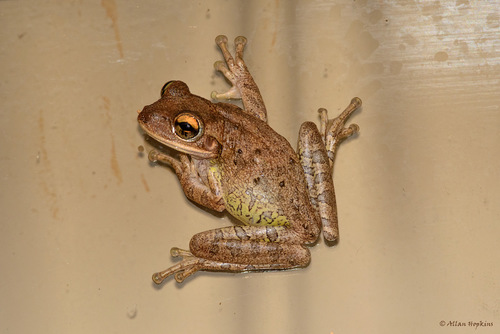
What it is
The Cuban tree frog (Osteopilus septentrionalis) is an amphibian native to the Caribbean region of the Western Hemisphere. It is the largest tree frog of North America. Its wide diet and ability to thrive amongst humans has made it a highly invasive species with established colonies throughout peninsular Florida, the Hawaiian island of Oahu, and throughout the Caribbean Islands. They range in size from 3 to 5.5 in (76 to 140 mm) and vary in color from olive-brown...
Where and when to find it
- Habitat
- Mainly found in Florida and other warm, humid parts of the southeastern United States, often near houses and parks.
- How to find it
- Look on windows at night, on house walls, or in moist gardens. Listen for their loud, raspy call after sunset.
- Best time of day
- Nighttime, especially after rain or during warm evenings.
How it lives
- What it eats
- Insects, spiders, scorpions, and even other frogs.
- What eats it
- Snakes, large birds, raccoons (less common due to skin secretions).
Worth knowing
- They have large toe pads that help them climb smooth surfaces.
- Their skin secretions can be irritating to some people and pets.
- They can lay thousands of eggs at a time.
- They are one of the largest tree frogs in North America.
- They were accidentally brought to Florida a long time ago.
- They can often be seen clinging to windows at night to catch bugs attract by lights.
Why it matters
Cuban tree frogs eat many insects and small animals. They can outcompete native frogs for food and space if they are not native to an area.