

Eastern Forktail
Ischnura verticalis
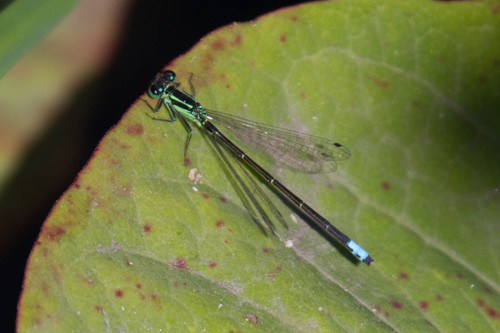
What it is
Eastern forktail (Ischnura verticalis) is a member of the damselfly family Coenagrionidae.
Where and when to find it
- Habitat
- You can find them near almost any still or slow-moving water, like ponds, marshes, and ditches throughout the eastern US.
- How to find it
- Look closely at reeds and grass blades near water. They are small and often perch horizontally, but the males' bright blue tails can be striking.
- Best time of day
- Sunny days, from late spring to early fall.
How it lives
- What it eats
- Mosquitoes, gnats, small flies, and other tiny insects.
- What eats it
- Birds, frogs, fish, larger dragonflies.
Worth knowing
- Damselflies are thinner and hold their wings over their backs when resting, unlike dragonflies.
- Males are bright blue, while females can be green, orange, or black.
- Their babies, called nymphs, live in the water for many months before becoming adults.
- They have huge eyes that help them see in almost every direction.
- They can fly backward and hover in place.
- If you look closely, you might see them 'skimming' the water to lay eggs.
Why it matters
Eastern Forktails eat many small insects, helping to control mosquito populations. They are also a food source for fish and birds.