

Fall Webworm Moth
Hyphantria cunea
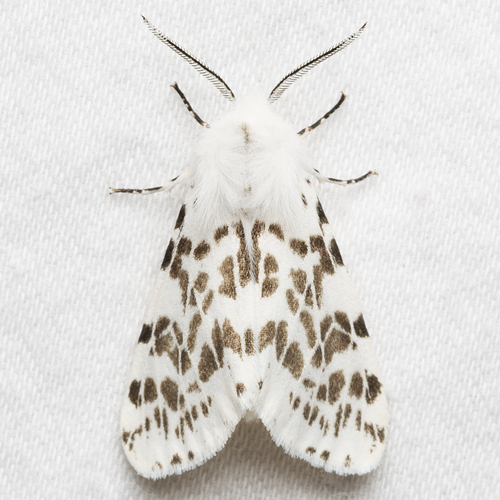
What it is
The fall webworm (Hyphantria cunea) is a moth in the family Erebidae known principally for its larval stage, which creates the characteristic webbed nests on the tree limbs of a wide variety of hardwoods in the late summer and fall. It is mainly an aesthetic pest and is not believed to harm otherwise healthy trees. It is well known to commercial tree services and arboriculturists.
Where and when to find it
- Habitat
- Found throughout the entire US, especially in trees and shrubs along roadsides, in parks, and in forests.
- How to find it
- Look for large, white, silky webs at the ends of tree branches in late summer and fall. You'll see many small, fuzzy caterpillars inside.
- Best time of day
- Late summer and early fall, when their webs are most visible.
How it lives
- What it eats
- Leaves from many different kinds of trees and shrubs.
- What eats it
- Birds, wasps, spiders, and other predatory insects.
Worth knowing
- They build their webs to protect themselves from predators.
- There can be hundreds of caterpillars living in one web.
- They are one of the last caterpillars to appear in the year.
- The adult moths are usually pure white, sometimes with small spots.
- They eat the leaves from inside their web, expanding it as they grow.
- If you touch the web, it feels soft and strong.
Why it matters
Fall webworm moths are natural recyclers, helping to break down leaves. They also provide food for birds and other insects.