

Gopher Tortoise
Gopherus polyphemus
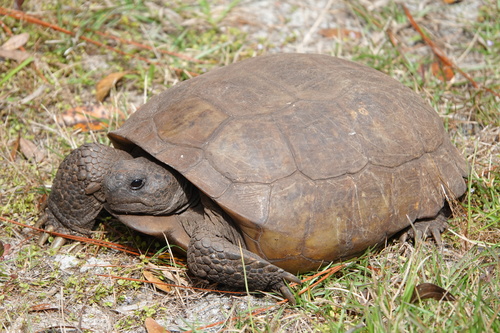
What it is
The gopher tortoise (Gopherus polyphemus) is a species of the Gopherus genus native to the southeastern United States. The gopher tortoise is seen as a keystone species because it digs burrows that provide shelter for at least 360 other animal species. They are threatened by predation and habitat destruction.
Where and when to find it
- Habitat
- Found in sandy, dry habitats like pine forests and sandhills in the southeastern United States (Florida, Georgia, Alabama, Mississippi, Louisiana, South Carolina).
- How to find it
- Look for their tell-tale half-moon shaped burrow entrances in sandy soil. You might spot them grazing near their burrows.
- Best time of day
- Mornings and late afternoons; spring and summer.
How it lives
- What it eats
- Grasses, leaves, berries, and other plants.
- What eats it
- Raccoons, foxes (mostly young ones); burrows protect adults.
Worth knowing
- Gopher tortoises can live for over 60 years in the wild.
- Their burrows can be up to 40 feet long and 10 feet deep.
- Over 350 different species have been found using gopher tortoise burrows for shelter.
- They have shovel-like front legs perfect for digging.
- Gopher tortoises are very important for their ecosystem, often called an 'ecosystem engineer'.
- They prefer to eat fresh, tender shoots of plants.
Why it matters
Gopher tortoises dig deep burrows that provide homes and safety for hundreds of other animal species, making them a keystone species.