

Great Spangled Fritillary
Argynnis cybele
What it is
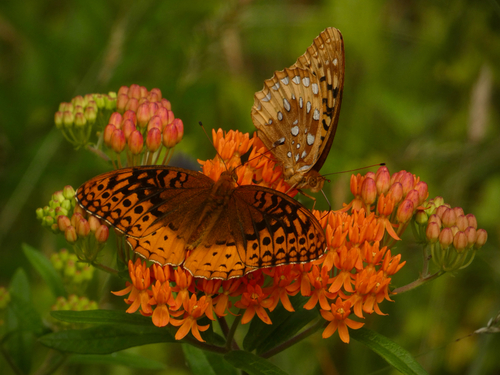
The great spangled fritillary (Speyeria cybele) is a North American butterfly of the family Nymphalidae.
Where and when to find it
- Habitat
- They like sunny open areas like meadows, fields, and forest edges across much of the eastern and central US.
- How to find it
- Look for them visiting purple flowers like thistles or milkweed on a sunny day. They often rest with their wings open.
- Best time of day
- Mid-morning to late afternoon, during summer.
How it lives
- What it eats
- Flower nectar (adults), violet leaves (caterpillars).
- What eats it
- Birds, spiders, other insects.
Worth knowing
- The 'fritillary' part of their name means 'checkered' or 'spotted'.
- They lay their eggs on or near violet plants, not directly on the leaves.
- The caterpillars hide during the day and feed at night to avoid predators.
- The underside of their wings has striking silver spots that catch the light.
- They often bask in the sun to warm up their wings for flight.
- Males fly faster than females, especially when looking for a mate.
Why it matters
Great Spangled Fritillaries are important pollinators, helping flowers and plants make seeds. Their caterpillars eat violet leaves, helping control plant growth.