

Green Iguana
Iguana iguana
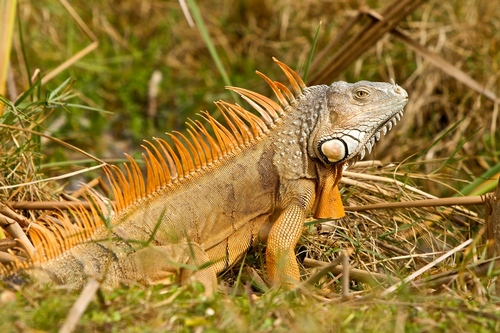
What it is
The green iguana (Iguana iguana), also known as the American iguana, is a large, arboreal, mostly herbivorous species of lizard of the genus Iguana. It is native to Central, South America, and the Caribbean. Usually, this animal is simply called the iguana. The green iguana ranges over a large geographic area, from southern Brazil and Paraguay as far north as Mexico and the Caribbean Islands. They have been introduced from South America to Puerto Rico and...
Where and when to find it
- Habitat
- Originally from Central and South America, they can now be found in warm, tropical areas of the United States, like South Florida.
- How to find it
- Look up in trees, on fences, or sunning themselves on rocks in very warm, sunny places. They are often near water.
- Best time of day
- Warm, sunny days, especially in the morning
How it lives
- What it eats
- Leaves, flowers, fruits (mostly plants)
- What eats it
- Large birds of prey, snakes, large mammals
Worth knowing
- They can grow to be very large, sometimes over 5 feet long!
- They have a special spike on their chin that looks like a beard.
- They can change their color a little bit to match their surroundings.
- They have a 'third eye' spot on top of their head that can sense light and shadow.
- They are excellent swimmers and can hold their breath underwater for a long time.
- Baby iguanas are much brighter green than adults.
Why it matters
In their native habitats, they browse on plants, helping to shape the plant community. In the US, they are an introduced species.