

Isabella Tiger Moth
Pyrrharctia isabella
What it is
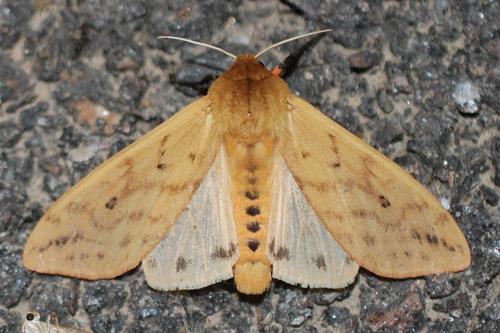
Pyrrharctia isabella, the isabella tiger moth or woollybear, occurs in the United States and southern Canada. It was first described by James Edward Smith in 1797.
Where and when to find it
- Habitat
- You can find Isabella Tiger Moths and their caterpillars across all of the United States. They live in gardens, fields, and woodlands.
- How to find it
- Look for the fuzzy caterpillars crawling on the ground in fall and spring. The adult moths are light yellow with tiny black spots.
- Best time of day
- Caterpillars: Fall and early spring. Moths: Summer nights.
How it lives
- What it eats
- Caterpillars eat many plants; adult moths drink nectar.
- What eats it
- Birds, spiders, small mammals, and insect predators.
Worth knowing
- The caterpillar freezes solid to survive winter and thaws out in spring.
- Its fur isn't just for show; it helps protect it from predators and cold.
- The adult moth is a pretty yellow-orange color.
- Legend says the wider the black band on a woolly bear, the harsher the winter will be!
- It rolls into a tight ball when it feels threatened.
- The hairs are not poisonous, but some people might find them a little irritating.
Why it matters
As caterpillars, they eat plants, helping to process plant matter. As moths, they can be food for birds and bats.