

Pearl Crescent
Phyciodes tharos
What it is
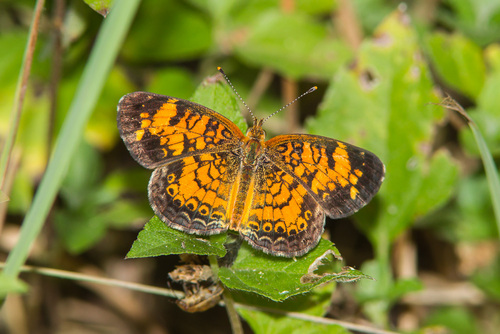
The pearl crescent (Phyciodes tharos) is a butterfly of North America. It is found in all parts of the United States except the west coast, and throughout Mexico and parts of southern Canada, in particular Ontario. Its habitat is open areas such as pastures, road edges, vacant lots, fields, open pine woods. Its pattern is quite variable. Males usually have black antenna knobs. Its upperside is orange with black borders; postmedian and submarginal areas are crossed...
Where and when to find it
- Habitat
- You can find Pearl Crescents in open, sunny areas across much of the eastern and central United States, like meadows and fields.
- How to find it
- Look for them in open, sunny spots with lots of wildflowers. They often land on flowers to drink nectar.
- Best time of day
- Warm, sunny days from spring through fall, especially in the afternoon.
How it lives
- What it eats
- Flower nectar
- What eats it
- Birds, spiders, praying mantises
Worth knowing
- They get their name from crescent-shaped marks on their hindwings.
- Young caterpillars eat aster leaves.
- There can be many generations of these butterflies in one year.
- They are one of the most common butterflies you might see in their range.
- Males often perch on low plants, waiting for females.
- Their flight looks bouncy and a bit erratic.
Why it matters
Pearl Crescents help pollinate flowers as they sip nectar. They are also a food source for other animals.