

Queen
Danaus gilippus
What it is
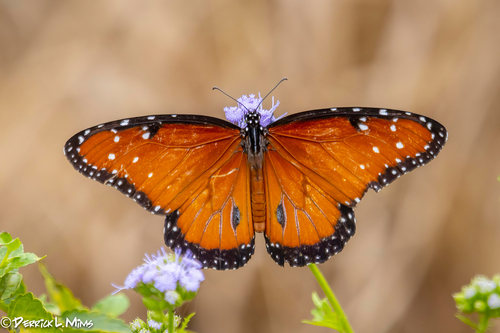
The queen butterfly (Danaus gilippus) is a North and South American butterfly in the family Nymphalidae with a wingspan of 70–88 mm (2.8–3.5 in). It is orange or brown with black wing borders and small white forewing spots on its dorsal wing surface, and reddish ventral wing surface fairly similar to the dorsal surface. The ventral hindwings have black veins and small white spots in a black border. The male has a black androconial scent patch on its...
Where and when to find it
- Habitat
- Mostly found in the southern United States, including Florida, Texas, and parts of California and the Southwest. They like open, sunny areas with milkweed plants.
- How to find it
- Look for them in sunny fields, gardens, and open areas where milkweed grows. They often visit flowers for nectar.
- Best time of day
- Daytime, especially sunny mornings and afternoons; spring to fall.
How it lives
- What it eats
- Nectar from various flowers as an adult. Caterpillars eat milkweed plants.
- What eats it
- Birds (though often avoided due to taste), spiders, predatory insects.
Worth knowing
- They lay their eggs on milkweed plants, just like Monarch butterflies.
- Their caterpillars have three pairs of tentacles, while Monarch caterpillars have two.
- In some sunny, warm places, they can be seen flying all year long.
- Queen butterflies are thought to mimic Monarchs, which are poisonous to predators.
- Their chrysalis is also beautiful and often pale green or blue with gold spots.
- They are strong fliers and can travel long distances.
Why it matters
Queens are important pollinators, helping plants make seeds. Their caterpillars eat milkweed, just like Monarchs.