

Question Mark
Polygonia interrogationis
What it is
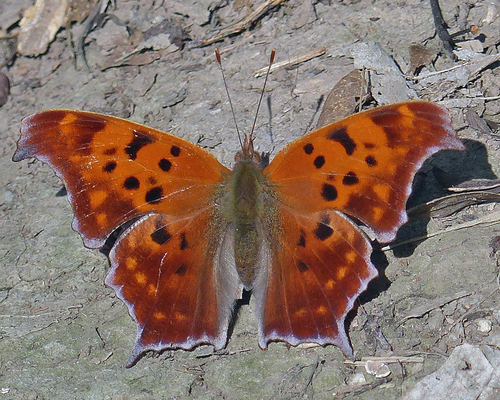
Polygonia interrogationis, the question mark, is a North American nymphalid butterfly. It lives in wooded areas, city parks, generally in areas with a combination of trees and open space. The color and textured appearance of the underside of its wings combine to provide camouflage that resembles a dead leaf. The adult butterfly has a wingspan of 4.5–7.6 cm (1.8–3.0 in). Its flight period is from May to September. "The silver mark on the underside of the hindwing is...
Where and when to find it
- Habitat
- Found across most of the US, especially in woodlands, open fields, and suburban areas near trees like elm, hackberry, and nettles.
- How to find it
- Look for them basking in sunny spots on leaves or tree trunks. They often rest with wings closed, mimicking a dry leaf. Search for the small white '?' mark.
- Best time of day
- Daytime, spring to fall. They are active on sunny days.
How it lives
- What it eats
- Tree sap, rotting fruit, animal droppings, and flower nectar.
- What eats it
- Birds, spiders, and other insect predators.
Worth knowing
- They get their name from the tiny silver '?' mark on their hindwings.
- Their caterpillars have spiky bodies, but they don't sting.
- They can overwinter as adult butterflies, just like Mourning Cloaks.
- Their camouflage is so good, you might mistake them for a dead leaf.
- They love to drink tree sap more than flower nectar.
- The 'question mark' can sometimes look like a semicolon instead!
Why it matters
Question Mark butterflies help pollinate flowers and their caterpillars are food for birds. They are an important part of forest ecosystems.