

Variegated Fritillary
Euptoieta claudia
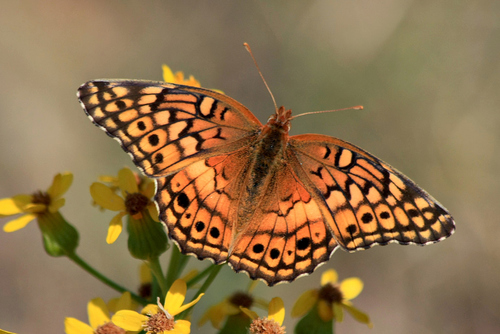
What it is
Euptoieta claudia, the variegated fritillary, is a North and South American butterfly in the family Nymphalidae. Even though the variegated fritillary has some very different characteristics from the Speyeria fritillaries, it is still closely related to them. Some of the differences are: variegated fritillaries have two or three broods per year vs. one per year in Speyeria; they are nomadic vs. sedentary; and they use a wide range of host plants vs. just violets. And because...
Where and when to find it
- Habitat
- You can find Variegated Fritillaries in open habitats like fields, pastures, gardens, and roadsides across the southern and central US, and sometimes further north.
- How to find it
- Look for them fluttering over wildflowers in sunny, open areas. They often land to bask in the sun with their wings spread.
- Best time of day
- Sunny days, especially from late spring to fall.
How it lives
- What it eats
- Nectar from flowers (adults), plant leaves (caterpillars)
- What eats it
- Birds, spiders, praying mantises, lizards
Worth knowing
- Their caterpillars have spines, but they are harmless to touch.
- They can migrate long distances, especially from the southern US.
- The 'fritillary' part of their name comes from the small, checkered patterns on their wings.
- The undersides of their wings have beautiful silver-like spots.
- Females lay their eggs on various host plants, often weeds like passionflower.
- They are often found in disturbed areas, like vacant lots with wildflowers.
Why it matters
This butterfly helps pollinate wildflowers as it sips nectar from them. Its caterpillars also eat weeds, helping to control them.