

Western Whiptail
Aspidoscelis tigris
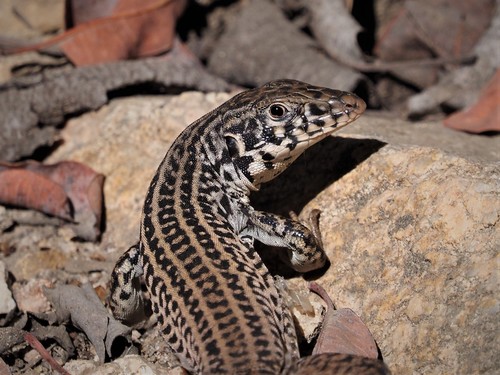
What it is
The western whiptail (Aspidoscelis tigris) is a species of lizard in the family Teiidae. The species ranges throughout most of the southwestern United States and northern Mexico. Most of its populations appear stable, and it is not listed as endangered in any of the states comprising its range. It lives in a wide variety of habitats, including deserts and semiarid shrubland, usually in areas with sparse vegetation; it also may be found in woodland, open dry...
Where and when to find it
- Habitat
- Found in the western United States, in dry, open habitats like deserts, grasslands, and chaparral.
- How to find it
- Look for them scurrying across open, sunny spots, often near bushes or rocks. They are very quick moving!
- Best time of day
- Warm, sunny parts of the day, particularly mid-morning or late afternoon
How it lives
- What it eats
- Insects, spiders, scorpions
- What eats it
- Hawks, coyotes, snakes, other lizards
Worth knowing
- They have a very long tail, sometimes twice the length of their body.
- They are incredibly fast and can quickly dig into loose soil to escape danger.
- Some Western Whiptails can lay eggs without a male partner (a unique way to reproduce!).
- They often stop, dig with their front legs, and then quickly move on, looking for food.
- Their common name 'whiptail' comes from their long, whip-like tail.
- They are very active during the hottest parts of the day when many other animals hide.
Why it matters
These lizards help control insect populations and are an important part of the desert food chain. They show us a healthy desert ecosystem.