

Zabulon Skipper
Lon zabulon
What it is
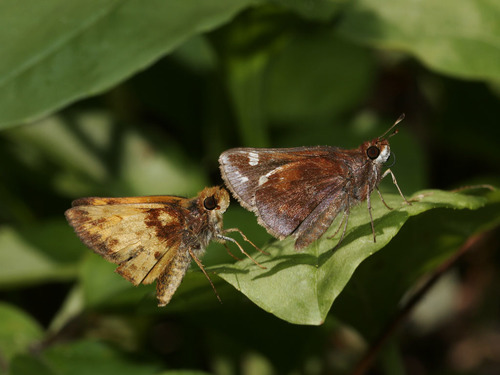
The Zabulon skipper (Poanes zabulon) (sometimes called the southern dimorphic skipper) is a North American butterfly first described by the French naturalists Jean Baptiste Boisduval and John Eatton Le Conte from the state of Georgia, United States.
Where and when to find it
- Habitat
- They love open woodlands, forest edges, and grassy areas across the eastern US.
- How to find it
- Look for them quickly darting among flowers or resting on leaves. Males are bright orange, females are dark brown with yellow spots.
- Best time of day
- Sunny mornings and afternoons, from spring to fall.
How it lives
- What it eats
- Flower nectar (adults), various grass leaves (caterpillars).
- What eats it
- Birds, spiders, lizards, frogs.
Worth knowing
- Skippers get their name because of their quick, 'skipping' flight pattern.
- They have hooked antennae, which is different from most butterflies.
- Males are attracted to the color yellow when looking for mates.
- They rest with their forewings and hindwings held at different angles.
- Caterpillars build shelters by rolling up grass blades and tying them with silk.
- Sometimes you can see many Zabulon Skippers flying together in a sunny clearing.
Why it matters
Zabulon Skippers help pollinate woodland flowers and grasses. Their caterpillars eat plant leaves, turning them into food for other animals.