

Barn Swallow
Hirundo rustica
What it is
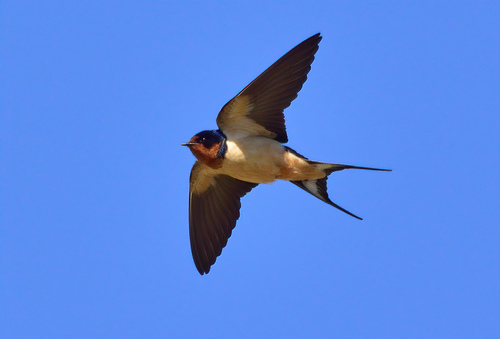
The barn swallow (Hirundo rustica) is the most widespread species of swallow in the world. It is a distinctive passerine bird with blue upperparts, a long, deeply forked tail and curved, pointed wings. It is found in Europe, Asia, Africa and the Americas. In Anglophone Europe it is just called the swallow; in Northern Europe it is the only common species called a "swallow" rather than a "martin".
Where and when to find it
- Habitat
- Found all across the U.S. in open areas, farms, and near water. They often nest in barns or under bridges.
- How to find it
- Look for their darting flight over fields or water. They often nest under eaves, bridges, or in barns.
- Best time of day
- Daytime during spring and summer, when they are nesting and feeding.
How it lives
- What it eats
- Flying insects like flies, mosquitoes, beetles
- What eats it
- Larger birds of prey, snakes, raccoons (eggs/chicks)
Worth knowing
- Barn swallows build their nests out of mud pellets mixed with grass and feathers.
- They are one of the most widespread swallow species in the world.
- Their long, forked tail helps them steer quickly while flying.
- They often return to the same nesting site year after year.
- Both parents help build the nest and raise the babies.
- Barn swallows can travel thousands of miles during migration each year.
Why it matters
Barn swallows are important for keeping insect populations in check. They are signs of healthy environments.