

Laughing Gull
Leucophaeus atricilla
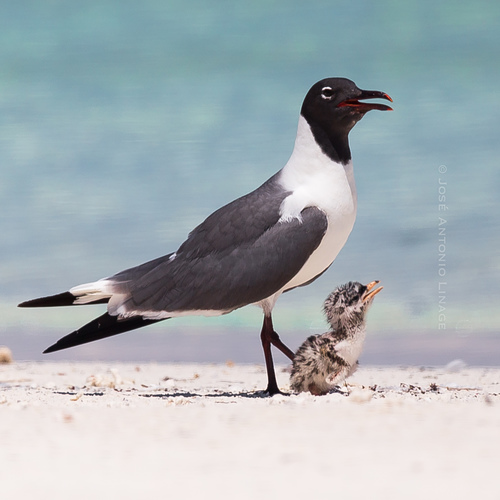
What it is
The laughing gull (Leucophaeus atricilla) is a medium-sized gull of North and South America. The genus name Leucophaeus is from Ancient Greek leukos, "white", and phaios, "dusky". The specific atricilla is from Latin ater, "black", and cilla, "tail". Linnaeus appears to have misread his note atricapilla (black-haired), which would have been much more appropriate for this black-headed, but white-tailed, bird.
Where and when to find it
- Habitat
- You can find Laughing Gulls along US coastlines, especially near beaches, marshes, and fishing piers.
- How to find it
- Look for them near the water, often flying low or walking along the sand. Listen for their unique 'ha-ha-ha' call.
- Best time of day
- Daytime, especially during breeding season (spring and summer) to see their dark heads.
How it lives
- What it eats
- Fish, crabs, insects, worms, trash
- What eats it
- Falcons, owls, larger gulls, raccoons
Worth knowing
- Their heads turn dark brown or black during the summer when they are nesting.
- They often follow fishing boats to catch discarded fish.
- Laughing Gulls are one of the most common gulls along the Atlantic and Gulf Coasts.
- They get their name from their call, which sounds just like a person laughing!
- Sometimes they steal food right out of the beaks of other birds.
- Baby Laughing Gulls have speckles and look very fluffy.
Why it matters
Laughing Gulls help keep shorelines clean by eating scraps and act as a food source for larger predators.