

Great Horned Owl
Bubo virginianus
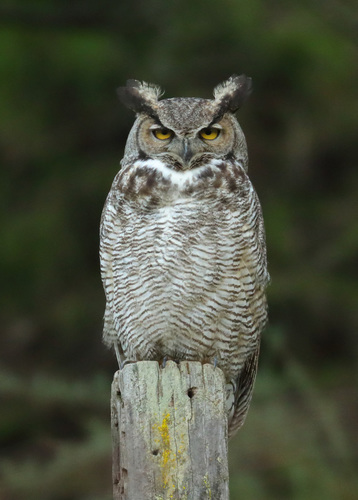
What it is
The great horned owl (Bubo virginianus), also known as the tiger owl (originally derived from early naturalists' description as the "winged tiger" or "tiger of the air") or the hoot owl, is a large owl native to the Americas. It is an extremely adaptable bird with a vast range and is the most widely distributed true owl in the Americas. Its primary diet is rabbits and hares, rats and mice and voles, although it freely hunts...
Where and when to find it
- Habitat
- You can find them all over the United States, in forests, deserts, swamps, and even city parks.
- How to find it
- Listen for their distinctive hooting at night. Look for large stick nests high in trees, especially in winter when leaves are off.
- Best time of day
- Nighttime, especially at dusk and dawn. Best listened for in winter.
How it lives
- What it eats
- Mostly small mammals (mice, rabbits), birds, reptiles
- What eats it
- None (as adults), sometimes other large predators (as owlets)
Worth knowing
- Great Horned Owls can turn their heads almost all the way around, up to 270 degrees!
- Those feathery tufts on their heads are not ears, but just feathers. Their real ears are hidden.
- They are very strong and can carry prey heavier than themselves.
- They are sometimes called the 'tiger of the air' because of their powerful hunting skills.
- Great Horned Owls often take over nests built by other large birds, like hawks.
- Their talons (claws) are so strong, they can pierce through thick skin.
Why it matters
Great Horned Owls are top predators, keeping populations of their prey in balance. They contribute to a healthy ecosystem.