

Barred Owl
Strix varia
What it is
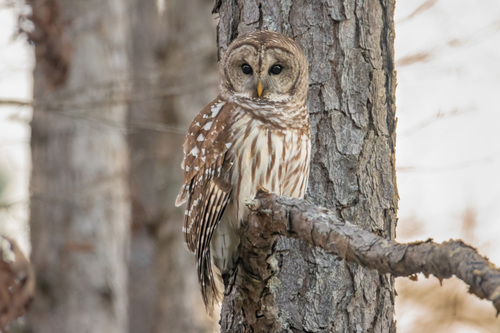
The barred owl (Strix varia), or northern barred owl or hoot owl, is a true owl native to eastern North America. Adults are large, and are brown to grey with barring on the chest. Barred owls have expanded their range to the west coast of the United States, where they are considered invasive. Mature forests are their preferred habitat, but they are also found in open woodland areas. Their diet consists mainly of small mammals, but...
Where and when to find it
- Habitat
- You can find Barred Owls in mature forests, woodlands, and swamps across the eastern US, spreading into the Pacific Northwest.
- How to find it
- Listen for their distinctive 'Who cooks for you?' call, especially at dusk or dawn. Look for them perched in dense trees.
- Best time of day
- Dusk and dawn, or moonlit nights.
How it lives
- What it eats
- Mice, voles, squirrels, small birds, frogs, insects
- What eats it
- Great Horned Owls, raccoons (eggs/chicks)
Worth knowing
- They have excellent hearing to find prey in the dark.
- Their calls are often described as sounding like words: 'Who cooks for you? Who cooks for you all?'
- Barred Owls are often found near water.
- They are fairly large, about the size of a crow.
- Unlike many owls, they have dark eyes.
- They sometimes hunt during the day, especially if they have hungry chicks.
Why it matters
Barred Owls help keep rodent and insect populations in check. This helps maintain a natural balance in forest ecosystems.