

Brown-headed Cowbird
Molothrus ater
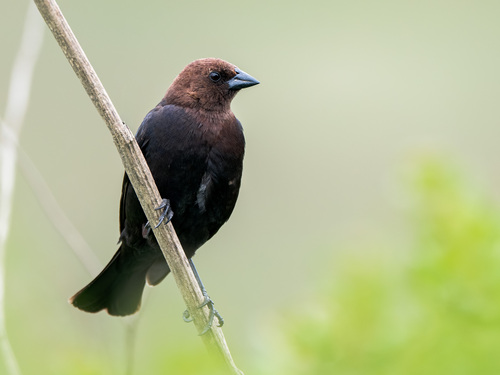
What it is
The brown-headed cowbird (Molothrus ater) is a small obligate brood parasitic icterid of temperate to subtropical North America. They are permanent residents in the southern parts of their range; northern birds migrate to the southern United States and Mexico in winter, returning to their summer habitat around March or April.
Where and when to find it
- Habitat
- Found in open grasslands, farmlands, suburban areas, and forest edges across most of the United States.
- How to find it
- Look for a chunky, short-tailed black bird with a brown head (males) or an all grayish-brown bird (females), often foraging on the ground.
- Best time of day
- Daytime, especially morning and late afternoon.
How it lives
- What it eats
- Seeds, insects, berries.
- What eats it
- Hawks, owls, snakes, raccoons.
Worth knowing
- They are 'brood parasites', meaning they don't build their own nests.
- Female cowbirds can lay many eggs in different nests over a breeding season.
- They follow grazing animals to eat insects stirred up by their hooves (hence 'cowbird').
- Cowbird eggs often hatch faster than the host's eggs.
- Their young are often larger than the host's young, getting more food.
- They were originally birds of the open plains, following bison herds.
Why it matters
Cowbirds are part of the food web, eating insects and seeds. Their nesting habits influence other bird populations.