

Bufflehead
Bucephala albeola
What it is
The bufflehead (Bucephala albeola) is a small sea duck of the genus Bucephala, the goldeneyes. This species was first described by Carl Linnaeus in his landmark 1758 10th edition of Systema Naturae as Anas albeola.
Where and when to find it
- Habitat
- You can find Buffleheads on lakes, ponds, and slow-moving rivers across much of the United States, especially during winter and migration.
- How to find it
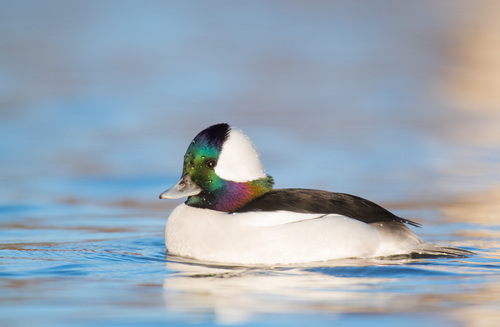
- Look for small ducks that dive under water frequently. Males have a puffy head with a large white triangular patch behind the eye. Females have a smaller white patch on their cheek.
- Best time of day
- Daytime, during fall, winter, and spring in migration/wintering areas.
How it lives
- What it eats
- Aquatic insects, crustaceans, small fish, seeds.
- What eats it
- Hawks, owls, larger ducks, raccoons, mink.
Worth knowing
- They are cavity nesters, meaning they build their nests in old tree holes, often made by flickers.
- The male's head feathers can look iridescent green and purple in good light.
- Buffleheads are one of the smallest diving ducks in North America.
- Their name comes from their 'buffalo' shaped head.
- They can stay underwater for about 10-15 seconds during a dive.
- They often swim in small groups or pairs.
Why it matters
Buffleheads eat aquatic insects and small fish, helping to control their populations in ponds and lakes. They are also part of the food web for larger predators.