

Carolina Chickadee
Poecile carolinensis
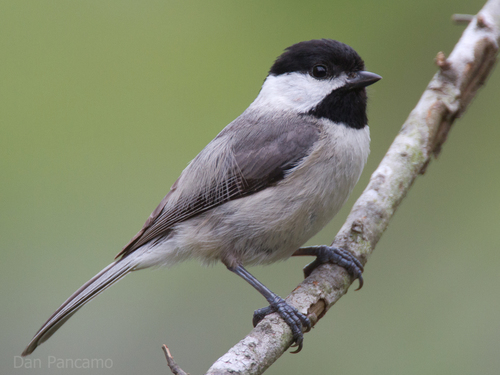
What it is
The Carolina chickadee (Poecile carolinensis) is a small passerine bird in the tit family Paridae. It is often placed in the genus Parus with most other tits, but mtDNA cytochrome b sequence data and morphology suggest that separating Poecile more adequately expresses these birds' relationships (Gill et al., 2005). The American Ornithologists' Union has been treating Poecile as distinct genus for some time already.
Where and when to find it
- Habitat
- You can find Carolina Chickadees in woods, parks, and backyards across the southeastern United States.
- How to find it
- Listen for their distinctive 'chickadee-dee-dee' call or their 'fee-bee fee-bee' song. They are often seen at bird feeders, especially for sunflower seeds. Look for them hopping quickly through branches.
- Best time of day
- Year-round, active all day, especially mornings. Often seen at feeders.
How it lives
- What it eats
- Insects, caterpillars, spiders, seeds, and berries.
- What eats it
- Hawks, owls, snakes, cats, raccoons.
Worth knowing
- They can hang upside down from branches to find insects.
- They cache (hide) seeds and insects for later.
- Their 'chickadee-dee-dee' call can warn other birds of predators.
- They are very curious and will sometimes come close to investigate you.
- They often join mixed flocks of other small birds in winter.
- They can learn to identify individual humans.
Why it matters
Carolina Chickadees eat many insects, helping to control pests. They are also important seed dispersers.