

Pied-billed Grebe
Podilymbus podiceps
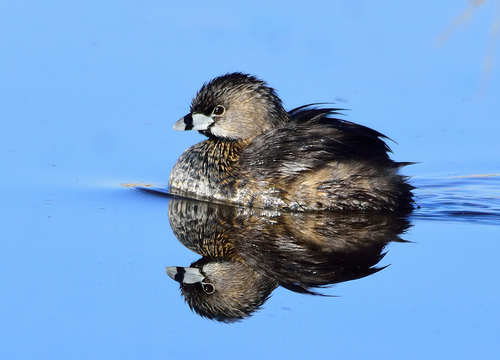
What it is
The pied-billed grebe (Podilymbus podiceps) is a species of the grebe family of water birds. Since the Atitlán grebe (Podilymbus gigas) has become extinct, it is the sole extant member of the genus Podilymbus. The pied-billed grebe is primarily found in ponds throughout the Americas. Other names of this grebe include American dabchick, dabchick, Carolina grebe, devil-diver, dive-dapper, dipper, hell-diver, pied-billed dabchick, pied-bill, thick-billed grebe, and water witch.
Where and when to find it
- Habitat
- You can find them on calm freshwater ponds, lakes, and slow-moving rivers across most of the US.
- How to find it
- Look for a small, brownish bird that sits low in the water. They often dive under the surface and can stay submerged for a long time.
- Best time of day
- Daytime, year-round, at dawn and dusk for best activity.
How it lives
- What it eats
- Small fish, insects, crayfish
- What eats it
- Hawks, owls, raccoons, large fish
Worth knowing
- They can control how much air is in their feathers to help them sink slowly.
- They build floating nests anchored to plants in the water.
- Their 'pied' bill means it has two colors, the black ring is only visible in summer.
- They often eat their own feathers, probably to help protect their stomachs from sharp fish bones!
- Baby grebes have stripes like little zebras.
- They are very shy and will often dive to escape danger, sometimes only their head pops back up!
Why it matters
Pied-billed Grebes help control fish and insect populations in freshwater habitats.