

Western Bluebird
Sialia mexicana
What it is
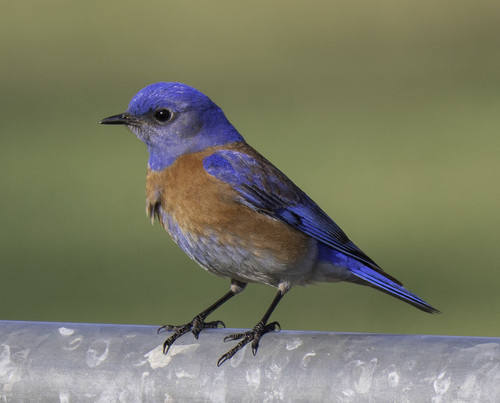
The western bluebird (Sialia mexicana) is a small thrush, about 15 to 18 cm (5.9 to 7.1 in) in length. Adult males are bright blue on top and on the throat with an orange breast and sides, a brownish patch on back, and a gray belly and undertail coverts. Adult females have a duller blue body, wings, and tail than the male, a gray throat, a dull orange breast, and a gray belly and undertail coverts. Immature western...
Where and when to find it
- Habitat
- You can find Western Bluebirds in open woodlands, savannas, farms, and even suburban parks across the western United States, from the Pacific Coast to the Rocky Mountains.
- How to find it
- Look for them sitting on fences, power lines, or low tree branches. They often fly down to catch insects on the ground. Listen for their soft, flutey song.
- Best time of day
- Year-round, but more active during spring and summer mornings. Look in open areas.
How it lives
- What it eats
- Mainly insects, especially grasshoppers and beetles; also berries in winter.
- What eats it
- Hawks, owls, cats, snakes.
Worth knowing
- Males have brighter blue feathers than females.
- They often nest in holes in trees or in birdhouses.
- Their young birds have spotted breasts.
- They sometimes dart out and catch insects right in the air, like a tiny acrobat!
- Groups of them might gather together in the winter to stay warm.
- They are related to Eastern Bluebirds.
Why it matters
Western Bluebirds help keep insect populations balanced. They also spread seeds when they eat berries.