

Western Gull
Larus occidentalis
What it is
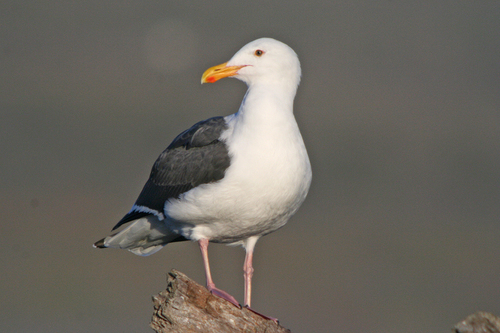
The western gull (Larus occidentalis) is a large white-headed gull that lives on the west coast of North America. It was previously considered conspecific with the yellow-footed gull (Larus livens) of the Gulf of California. The western gull ranges from British Columbia, Canada to Baja California, Mexico, and, because of its convenient colonies on the coast of California, it is well studied. Despite being a well-known bird species on the West Coast of the US, it...
Where and when to find it
- Habitat
- You can find Western Gulls along the Pacific coast of North America, from Washington down to Mexico.
- How to find it
- Look for large gulls with dark gray backs, white heads and undersides, and pink legs. They are very common on beaches, piers, and coastal towns. Listen for their loud calls.
- Best time of day
- All day, any time of year along the Pacific coast.
How it lives
- What it eats
- Fish, crustaceans, squid, carrion, discarded food, eggs, small birds.
- What eats it
- Large raptors, other gulls, seals, coyotes.
Worth knowing
- They often follow fishing boats, hoping for an easy meal.
- Western Gulls can live for a long time, sometimes over 20 years.
- They are known to be quite bold and curious around people.
- Some gulls can drink saltwater and get rid of the extra salt!
- Their calls can sound like a laugh or a squawk.
- They build nests on cliffs and islands, sometimes raising several chicks each year.
Why it matters
Western Gulls are important scavengers along the coast, cleaning up dead animals. They also hunt for fish and other creatures, keeping coastal ecosystems balanced.