

Willet
Tringa semipalmata
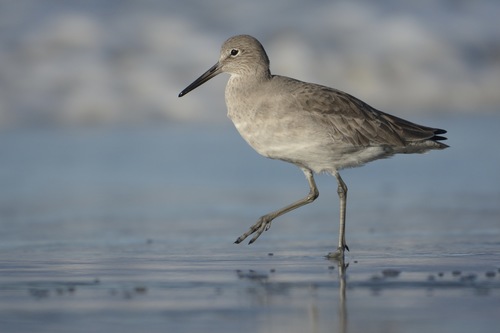
What it is
The willet (Tringa semipalmata), formerly in the monotypic genus Catoptrophorus as Catoptrophorus semipalmatus, is a large shorebird in the family Scolopacidae. It is a relatively large and robust sandpiper, and is the largest of the species called "shanks" in the genus Tringa. Its closest relative is the lesser yellowlegs, a much smaller bird with a very different appearance apart from the fine, clear, and dense pattern of the neck, which both species show in breeding plumage....
Where and when to find it
- Habitat
- You can find Willets on coastal beaches, salt marshes, and mudflats along the Atlantic, Pacific, and Gulf coasts of the US.
- How to find it
- Look for them wading in shallow water or running along beaches. Listen carefully for their distinctive and loud call.
- Best time of day
- Daytime, especially during low tide when more food is exposed.
How it lives
- What it eats
- Crabs, shrimp, insects, worms, small fish
- What eats it
- Gulls, raptors, foxes, raccoons (eggs/chicks)
Worth knowing
- They use their long beaks to probe deep into the mud for food.
- The western Willet is slightly larger than the eastern Willet.
- During breeding season, they have mottled brown plumage.
- Their name comes from the sound of their call.
- They sometimes splash in the water to clean their feathers.
- Willet chicks can feed themselves shortly after hatching.
Why it matters
Willet birds help control insect populations along coasts. Their feeding habits also help churn up the soil in marshy areas.