

Yellow-rumped Warbler
Setophaga coronata
What it is
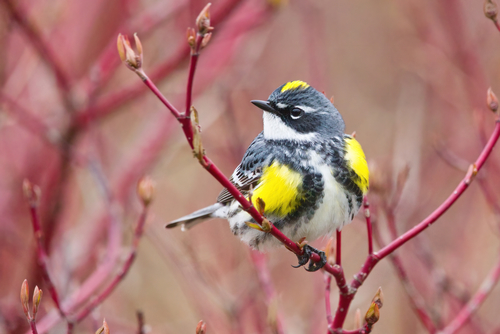
The yellow-rumped warbler (Setophaga coronata) is a North American bird species combining four closely related forms: the eastern myrtle warbler (ssp coronata); its western counterpart, Audubon's warbler (ssp group auduboni); the northwest Mexican black-fronted warbler (ssp nigrifrons); and the Guatemalan Goldman's warbler (ssp goldmani).
Where and when to find it
- Habitat
- You can find them all across the US! They like forests, parks, and even your backyard, especially during migration.
- How to find it
- Look for small, active birds in trees and bushes. Listen for their quick, trilling song. That yellow patch on their rump is a great clue!
- Best time of day
- Fall and spring during migration, but you can see them in many places in winter too. Early mornings are often best.
How it lives
- What it eats
- Insects like caterpillars and mosquitoes, also berries.
- What eats it
- Larger birds of prey, domestic cats, snakes.
Worth knowing
- They are one of the most common warblers in North America.
- The 'butter butt' nickname comes from their bright yellow rump.
- They can even digest the wax from bayberries and myrtle berries.
- There are two main groups: the 'Myrtle' warbler in the east and the 'Audubon's' warbler in the west.
- They often flick their tails, showing off their yellow patch.
- Some will even catch insects right out of the air like a flycatcher.
Why it matters
Yellow-rumped Warblers help control insect populations. They also spread seeds from the berries they eat.