

American pokeweed
Phytolacca americana
What it is
Phytolacca americana, the American pokeweed or simply pokeweed, is a herbaceous perennial plant in the pokeweed family Phytolaccaceae growing up to 8 feet (2 meters) in height. It is native to the eastern United States and has significant toxicity.
Where and when to find it
- Habitat
- You can find it all over the eastern US, in fields, forest edges, disturbed areas, and along roadsides. It likes sunny spots.
- How to find it
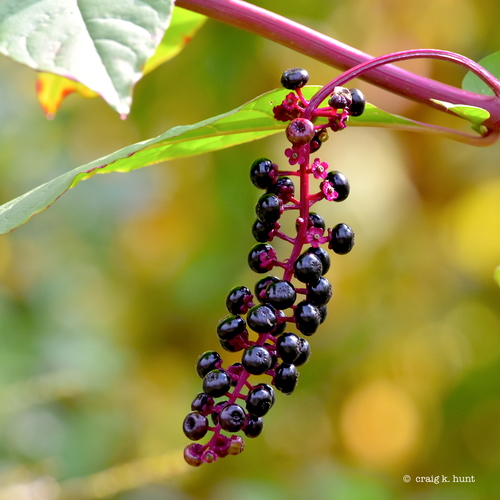
- Look for a tall, bushy plant with reddish stems and clusters of dark purple berries, especially in late summer and fall. You might see birds eating the berries.
- Best time of day
- Late summer and fall when the berries are ripe. Flowers are present mid-summer.
How it lives
- What it eats
- It makes its own food from the sun (it's a plant!).
- What eats it
- Birds like robins, thrushes, mockingbirds, and sometimes raccoons and opossums.
Worth knowing
- While birds can eat the berries, they are not good for humans or many other mammals.
- Some parts of the plant were traditionally used for dyes, making a purple color.
- It can grow very tall, sometimes over 10 feet in a single season.
- The stems of older pokeweed plants can be quite thick and look almost like a small tree trunk.
- The flowers are small and white, growing in long clusters that later turn into berries.
- Pollinators like bees and wasps visit the flowers to drink nectar.
Why it matters
American Pokeweed provides food for many birds and some mammals. Its deep roots help hold soil in place.