

sassafras
Sassafras albidum
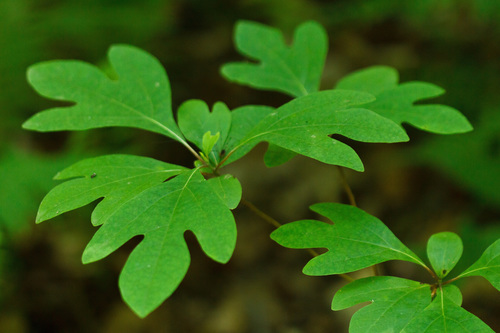
What it is
Sassafras albidum (sassafras, white sassafras, red sassafras, or silky sassafras) is a species of Sassafras native to eastern North America, from southern Maine and southern Ontario west to Iowa, and south to central Florida and eastern Texas. It occurs throughout the eastern deciduous forest habitat type, at altitudes of sea level up to 1,500 m (5000 feet). It formerly also occurred in southern Wisconsin, but is extirpated there as a native tree.
Where and when to find it
- Habitat
- Mainly found in the eastern United States, often at the edge of forests or in old fields.
- How to find it
- Look for leaves with one lobe (oval), two lobes (like a mitten), or three lobes. Scratch a twig to smell its root beer scent.
- Best time of day
- Spring for new leaves and flowers, summer to enjoy its scent.
How it lives
- What it eats
- Sunlight, water, nutrients from the soil
- What eats it
- Birds, deer, insects
Worth knowing
- Native Americans used sassafras for many things, including medicine and tea.
- Sassafras roots were a key ingredient in early root beer recipes.
- Its leaves are sometimes used to thicken Gumbo, a savory stew.
- Sassafras can grow into a large tree, but it often starts as a shrubby plant.
- The different leaf shapes can be found on one single branch.
- Its bright blue berries are a favorite food for many birds.
Why it matters
Sassafras provides food and shelter for wildlife. Its roots were once used to make tea and root beer.