

common yarrow
Achillea millefolium
What it is
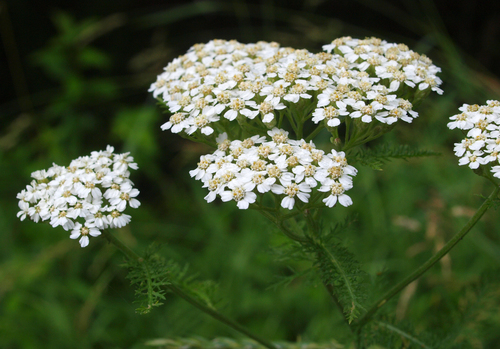
Achillea millefolium, commonly known as yarrow /ˈjæroʊ/ or common yarrow, is a flowering plant in the family Asteraceae. It is native to temperate regions of the Northern Hemisphere in Asia, Europe, and North America. It has been introduced as a feed for livestock in places like New Zealand and Australia. However, it is a weed in those places and sometimes also in its native regions.
Where and when to find it
- Habitat
- Found all across the US in sunny, open areas like fields, meadows, roadsides, and even in your backyard. It can grow in many different soil types.
- How to find it
- Look for its distinctive fern-like leaves and flat-topped clusters of small white (sometimes pinkish) flowers. It often grows in sunny, somewhat dry spots.
- Best time of day
- Blooms from late spring through fall, depending on your location. It's often visible all growing season.
How it lives
- What it eats
- It makes its own food from sunlight (photosynthesis).
- What eats it
- Deer, rabbits, some insects (rarely in large amounts).
Worth knowing
- Its scientific name 'Achillea' comes from the Greek hero Achilles, who was said to have used it for healing.
- The leaves are very finely divided, giving them a fern-like or 'yarrowy' look.
- It's a very adaptable plant and can be found almost everywhere in the northern hemisphere.
- Some people use dried yarrow flowers in crafts or as dried bouquets.
- It's a host plant for some small butterfly and moth larvae.
- The plant has a strong, unique scent when its leaves are crushed.
Why it matters
Common Yarrow provides nectar for many pollinators like bees and butterflies. Its deep roots help prevent soil erosion and improve soil health.