

American sweetgum
Liquidambar styraciflua
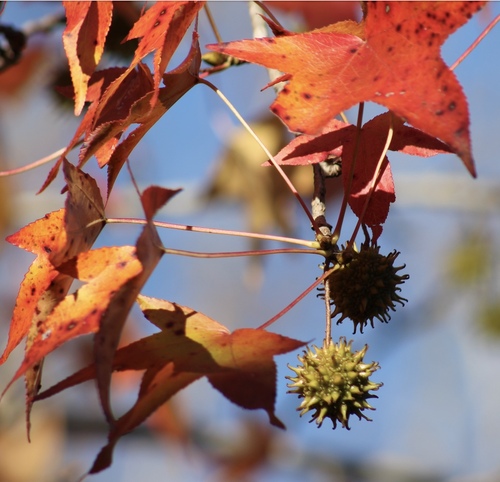
What it is
American sweetgum (Liquidambar styraciflua), also known as American storax, hazel pine, bilsted, redgum, satin-walnut, star-leaved gum, alligatorwood, or simply sweetgum, is a deciduous tree in the genus Liquidambar native to warm temperate areas of eastern North America and tropical montane regions of Mexico and Central America. Sweet gum is one of the main valuable forest trees in the southeastern United States, and is a popular ornamental tree in temperate climates. It is recognizable by the combination...
Where and when to find it
- Habitat
- Common in wetlands, floodplains, and upland woods throughout the eastern and southeastern United States.
- How to find it
- Look for its distinct five-pointed star-shaped leaves and the spiky, round fruits (gumballs) on the ground below.
- Best time of day
- Year-round for the tree, fall for colorful leaves and gumballs.
How it lives
- What it eats
- Sunlight, water, and nutrients from the soil.
- What eats it
- Squirrels, birds, deer, caterpillars.
Worth knowing
- The 'sweet gum' in its name comes from the resin, which was once used as chewing gum.
- Its wood is used for furniture, flooring, and plywood.
- The leaves turn brilliant colors in autumn.
- Native Americans used the tree's sap for medicinal purposes.
- Its spiky fruits can be a fun craft material.
- It is one of the most common trees in the southeastern US.
Why it matters
Sweetgum trees provide food and shelter for many animals. Their leaves nurture caterpillars and birds enjoy their seeds.